The eBooks we sell are sold as a single-user licence and are intended for the end user only.
The sale of some eBooks are restricted to certain countries. To alert you to such restrictions, please select the country of the billing address of your credit or debit card you wish to use for payment.
For further information see https://www.wildy.com/ebook-formats
Once the order is confirmed an e-mail will be sent to you to allow you to download the eBook. For UK purchases this will be automatic. For purchases outside the UK a member of staff will need to confirm the sale. (Staff are available to do this during normal business hours, Mon-Fri 8:30-17:00 UK time)
All eBooks are supplied firm sale and cannot be returned. If you believe there is a fault with your eBook then contact us on ebooks@wildy.com and we will help in resolving the issue. This does not affect your statutory rights.
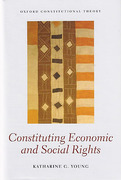
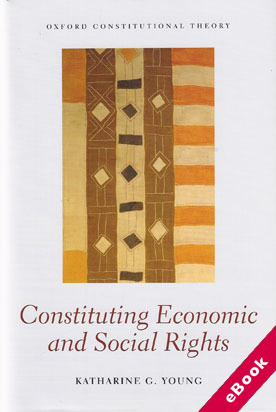
Food, water, health, housing, and education are as fundamental to human freedom and dignity as privacy, religion, or speech. Yet only recently have legal systems begun to secure these fundamental individual interests as rights.
Drawing on constitutional examples from South Africa, Colombia, Ghana, India, the United Kingdom, the United States and elsewhere, the book examines innovations in the design and role of institutions such as courts, legislatures, executives, and agencies in the organization of social movements and in the links established with market actors.
This comparative study shows how legal systems protect economic and social rights by shifting the focus from minimum bundles of commodities or entitlements to processes of value-based, deliberative problem solving.
Theories of constitutionalism and governance inform the potential of this approach to reconcile economic and social rights with both democratic and market principles, while addressing the material inequality, poverty and social conflict caused, in part, by law itself.