The eBooks we sell are sold as a single-user licence and are intended for the end user only.
The sale of some eBooks are restricted to certain countries. To alert you to such restrictions, please select the country of the billing address of your credit or debit card you wish to use for payment.
For further information see https://www.wildy.com/ebook-formats
Once the order is confirmed an e-mail will be sent to you to allow you to download the eBook. For UK purchases this will be automatic. For purchases outside the UK a member of staff will need to confirm the sale. (Staff are available to do this during normal business hours, Mon-Fri 8:30-17:00 UK time)
All eBooks are supplied firm sale and cannot be returned. If you believe there is a fault with your eBook then contact us on ebooks@wildy.com and we will help in resolving the issue. This does not affect your statutory rights.
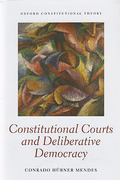
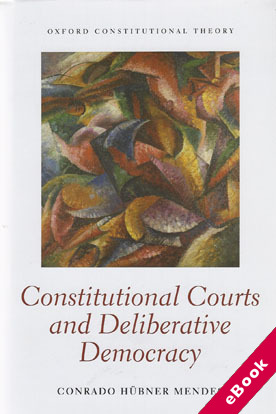
Contemporary democracies have granted an expansive amount of power to unelected judges that sit in constitutional or supreme courts. This power shift has never been easily squared with the institutional backbones through which democracy is popularly supposed to be structured. The best institutional translation of a 'government of the people, by the people and for the people' is usually expressed through elections and electoral representation in parliaments.
Judicial review of legislation has been challenged as bypassing that common sense conception of democratic rule. The alleged 'democratic deficit' behind what courts are legally empowered to do has been met with a variety of justifications in favour of judicial review. One common justification claims that constitutional courts are, in comparison to elected parliaments, much better suited for impartial deliberation and public reason-giving. Fundamental rights would thus be better protected by that insulated mode of decision-making. This justification has remained largely superficial and, sometimes, too easily embraced.
This book analyses the argument that the legitimacy of courts arises from their deliberative capacity. It examines the theory of political deliberation and its implications for institutional design. Against this background, it turns to constitutional review and asks whether an argument can be made in support of judicial power on the basis of deliberative theory.