
The eBooks we sell are sold as a single-user licence and are intended for the end user only.
The sale of some eBooks are restricted to certain countries. To alert you to such restrictions, please select the country of the billing address of your credit or debit card you wish to use for payment.
For further information see https://www.wildy.com/ebook-formats
Once the order is confirmed an e-mail will be sent to you to allow you to download the eBook. For UK purchases this will be automatic. For purchases outside the UK a member of staff will need to confirm the sale. (Staff are available to do this during normal business hours, Mon-Fri 8:30-17:00 UK time)
All eBooks are supplied firm sale and cannot be returned. If you believe there is a fault with your eBook then contact us on ebooks@wildy.com and we will help in resolving the issue. This does not affect your statutory rights.
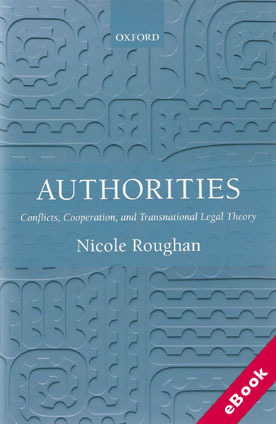
The interaction between state, transnational and international law is overlapping and often conflicting. Yet despite this messiness and multiplicity, law still creates obligations for its subjects. Despite its plurality, law still claims some kind of authority.
The implications of this plurality of law can be troubling. It generates uncertainty for law-users over which law they are bound by, or for law-makers over the limits of their authority. Thus the practical problem is not plurality of law in itself, rather confusion over law's authority in such pluralist circumstances.
Roughan argues that understanding authority in such pluralist circumstances requires a new conception of 'relative authority.' This book seeks to provide the theoretical tools needed to bring the disciplines examining legal and constitutional pluralism, into more direct engagement with theories of authority, by examining the one practice in which they are all interested: the practice of public authority.











