
The eBooks we sell are sold as a single-user licence and are intended for the end user only.
The sale of some eBooks are restricted to certain countries. To alert you to such restrictions, please select the country of the billing address of your credit or debit card you wish to use for payment.
For further information see https://www.wildy.com/ebook-formats
Once the order is confirmed an e-mail will be sent to you to allow you to download the eBook. For UK purchases this will be automatic. For purchases outside the UK a member of staff will need to confirm the sale. (Staff are available to do this during normal business hours, Mon-Fri 8:30-17:00 UK time)
All eBooks are supplied firm sale and cannot be returned. If you believe there is a fault with your eBook then contact us on ebooks@wildy.com and we will help in resolving the issue. This does not affect your statutory rights.
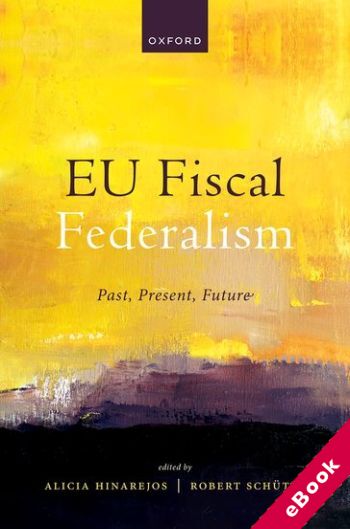
Fiscal federalism refers to the division of fiscal powers — powers to tax and spend — between different levels of government. The European Union (EU) is often seen as a legislative giant on clay feet, and one of the principal reasons for this feebleness is the lack of a significant fiscal capacity at the Union level.
EU Fiscal Federalism: Past, Present, Future explores ten aspects of the EU's fiscal constitution relating both to the fiscal limits it imposes on Member States and the evolution of its own fiscal policy. Bringing together an international and distinguished group of scholars, this volume analyses the different legal dimensions of fiscal federalism within the EU, from the various aspects of the single market (free movement, banking union, state aid, tax harmonisation) to the EU's budget and Economic and Monetary Union. The essays provide a fascinating overview of the topic as well as a detailed analysis of where EU fiscal federalism stands today and how it might develop in the future.
Sweeping and thorough, EU Fiscal Federalism addresses topics vital to maintaining and strengthening the Union's fiscal capabilities. It will appeal to academics and students of European Union law and political economy as well as European policymakers.











