The eBooks we sell are sold as a single-user licence and are intended for the end user only.
The sale of some eBooks are restricted to certain countries. To alert you to such restrictions, please select the country of the billing address of your credit or debit card you wish to use for payment.
For further information see https://www.wildy.com/ebook-formats
Once the order is confirmed an e-mail will be sent to you to allow you to download the eBook. For UK purchases this will be automatic. For purchases outside the UK a member of staff will need to confirm the sale. (Staff are available to do this during normal business hours, Mon-Fri 8:30-17:00 UK time)
All eBooks are supplied firm sale and cannot be returned. If you believe there is a fault with your eBook then contact us on ebooks@wildy.com and we will help in resolving the issue. This does not affect your statutory rights.
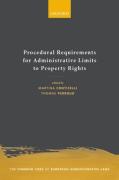
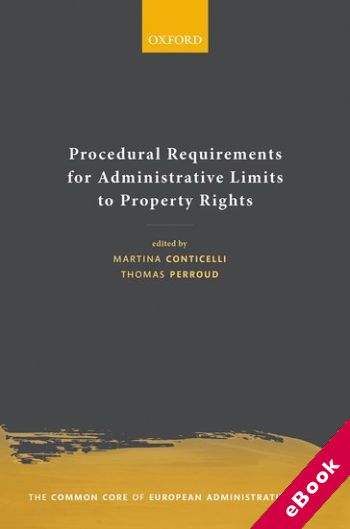
Through a comparative survey spanning twelve legal systems and a transnational regime, the fourth volume in this series aims to shed light on the core of administrative activity that exemplifies the 'negative State'. Within the vast field of adjudication, the book addresses one of the most traditional sets of procedures, namely, the exercise of public powers affecting property rights.
Following the method adopted in the CoCEAL project, this volume takes the fundamentals of expropriation in a given legal order as its starting point and examines various cases. The main requirements for property rights deprivations and restrictions are presented through national reports and discussed through hypotheticals, while the comparative analysis focuses on procedural propriety and fairness. This book is divided into three parts. The first part introduces the project and the topic. The second part covers the legal systems chosen for this study. The third goes on to present a synchronic comparison across systems, highlighting the relationship between shared and distinctive traits, with a view to the way supranational and international rules increasingly supplement municipal regimes. The concluding chapter discusses the current regime on public regulation of property in contemporary administrative systems.