
The eBooks we sell are sold as a single-user licence and are intended for the end user only.
The sale of some eBooks are restricted to certain countries. To alert you to such restrictions, please select the country of the billing address of your credit or debit card you wish to use for payment.
For further information see https://www.wildy.com/ebook-formats
Once the order is confirmed an e-mail will be sent to you to allow you to download the eBook. For UK purchases this will be automatic. For purchases outside the UK a member of staff will need to confirm the sale. (Staff are available to do this during normal business hours, Mon-Fri 8:30-17:00 UK time)
All eBooks are supplied firm sale and cannot be returned. If you believe there is a fault with your eBook then contact us on ebooks@wildy.com and we will help in resolving the issue. This does not affect your statutory rights.
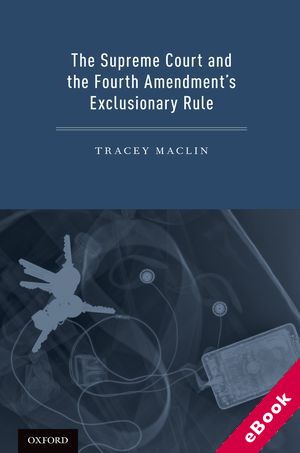
The application of the Fourth Amendment's Exclusionary Rule has divided the Justices of the Supreme Court for nearly a century. As the legal remedy for when police violate the Fourth Amendment rights of a person and discover criminal evidence through illegal search and seizure, it is the most frequently litigated constitutional issue in United States courts.
Tracey Maclin's The Supreme Court and the Fourth Amendment's Exclusionary Rule traces the rise and fall of the exclusionary rule using insight and behind-the-scenes access into the Court's thinking. Based on original archival research into the private papers of retired Justices, Professor Maclin's analysis clarifies the motivations and thoughts that explain the Court's exclusionary rule jurisprudence. He includes a comprehensive scholarly and objective discussion of the reasoning behind the Court decisions, and demonstrates that like other constitutional doctrines, the exclusionary rule is a political mechanism that expands and contracts as the times and Justices change. Ultimately, this book will help readers understand how constitutional law is constructed by judges with diverse political perspectives.











