
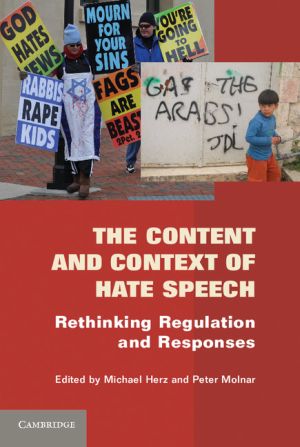
The contributors to this volume consider whether it is possible to establish carefully tailored hate speech policies that are cognizant of the varying traditions, histories, and values of different countries. Throughout, there is a strong comparative emphasis, with examples (and authors) drawn from around the world. All the authors explore whether or when different cultural and historical settings justify different substantive rules given that such cultural relativism can be used to justify content-based restrictions and so endanger freedom of expression. Essays address the following questions, among others: Is hate speech in fact so dangerous or harmful to vulnerable minorities or communities as to justify a lower standard of constitutional protection? What harms and benefits accrue from laws that criminalize hate speech in particular contexts? Are there circumstances in which everyone would agree that hate speech should be criminally punished? What lessons can be learned from international case law?










