
The eBooks we sell are sold as a single-user licence and are intended for the end user only.
The sale of some eBooks are restricted to certain countries. To alert you to such restrictions, please select the country of the billing address of your credit or debit card you wish to use for payment.
For further information see https://www.wildy.com/ebook-formats
Once the order is confirmed an e-mail will be sent to you to allow you to download the eBook. For UK purchases this will be automatic. For purchases outside the UK a member of staff will need to confirm the sale. (Staff are available to do this during normal business hours, Mon-Fri 8:30-17:00 UK time)
All eBooks are supplied firm sale and cannot be returned. If you believe there is a fault with your eBook then contact us on ebooks@wildy.com and we will help in resolving the issue. This does not affect your statutory rights.
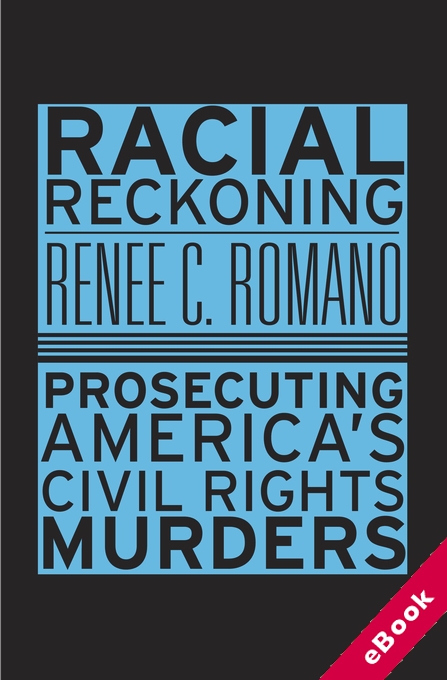
Few whites who violently resisted the civil rights struggle were charged with crimes in the 1950s and 1960s. But the tide of a long-deferred justice began to change in 1994, when a Mississippi jury convicted Byron De La Beckwith for the 1963 murder of Medgar Evers. Since then, more than one hundred murder cases have been reopened, resulting in more than a dozen trials. But how much did these public trials contribute to a public reckoning with America s racist past? Racial Reckoning "investigates that question, along with the political pressures and cultural forces that compelled the legal system to revisit these decades-old crimes.
Renee C. Romano brings readers into the courthouse for the trials of the civil rights era s most infamous killings, including the Birmingham church bombing and the triple murder of Andrew Goodman, James Chaney, and Mickey Schwerner. The activists who succeeded in reopening these cases hoped that bringing those responsible to justice would serve to highlight the state-sanctioned racism that had condoned the killings and the lingering effects of racial violence. Courtroom procedures, however, worked against a deeper exploration of the state s complicity in murder or a full accounting of racial injustices, past or present. Yet the media and a new generation of white southerners a different breed from the dying Klansmen on trial saw the convictions as proof of the politically rehabilitated South and stamped case closed on America s legacy of violent racism. Romano shows why addressing the nation s troubled racial past will require more than legal justice.











