
The eBooks we sell are sold as a single-user licence and are intended for the end user only.
The sale of some eBooks are restricted to certain countries. To alert you to such restrictions, please select the country of the billing address of your credit or debit card you wish to use for payment.
For further information see https://www.wildy.com/ebook-formats
Once the order is confirmed an e-mail will be sent to you to allow you to download the eBook. For UK purchases this will be automatic. For purchases outside the UK a member of staff will need to confirm the sale. (Staff are available to do this during normal business hours, Mon-Fri 8:30-17:00 UK time)
All eBooks are supplied firm sale and cannot be returned. If you believe there is a fault with your eBook then contact us on ebooks@wildy.com and we will help in resolving the issue. This does not affect your statutory rights.
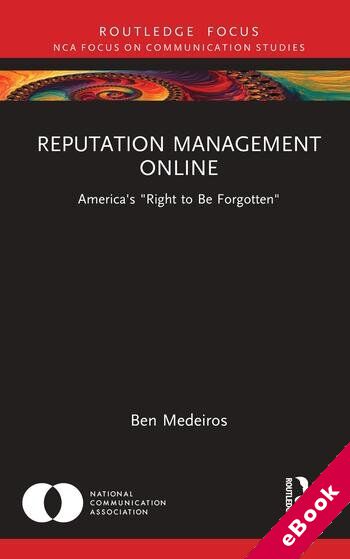
This book examines the work of the public relations, technology, and legal professionals who provide online "reputation management" services, situating their work within contemporary debates about regulating speech on the internet.
The author argues that legal solutions like the European "Right to Be Forgotten" are not really possible in the U.S., but that the private solutions of reputation management help to ameliorate novel concerns about reputation. At the same time, he contends that these practices prompt different free speech and dignitary concerns unique to the digital environment. Drawing upon rhetorical and legal analysis of diverse texts, including reputation management promotional materials, interviews with practitioners, legal cases, and popular online commentary about reputational disputes themselves, the book intervenes in specific debates about the regulation of the internet, as well as broader socio-legal debates about the role of reputation-damaging speech in a democratic society.
This timely and relevant study will have great relevance for all students and scholars of communication studies, public relations, rhetoric, new and digital media, internet law, technology and society, computer mediated communication, and sociology.











