The eBooks we sell are sold as a single-user licence and are intended for the end user only.
The sale of some eBooks are restricted to certain countries. To alert you to such restrictions, please select the country of the billing address of your credit or debit card you wish to use for payment.
For further information see https://www.wildy.com/ebook-formats
Once the order is confirmed an e-mail will be sent to you to allow you to download the eBook. For UK purchases this will be automatic. For purchases outside the UK a member of staff will need to confirm the sale. (Staff are available to do this during normal business hours, Mon-Fri 8:30-17:00 UK time)
All eBooks are supplied firm sale and cannot be returned. If you believe there is a fault with your eBook then contact us on ebooks@wildy.com and we will help in resolving the issue. This does not affect your statutory rights.
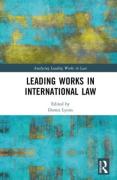
This volume provides an innovative and engaging way of assessing the development of international law scholarship and practice to date and its potential future development by focusing upon the ‘leading works’ of the discipline. International law has established itself as an important area of academic study and legal practice. Given its academic, legal and everyday significance and its prolific role within law school teaching and research, it is important to question and analyse the development of international law, exploring the complex and shifting interplay between law, policy, theory and culture and the role of international and national actors within a diverse and dynamic community of nations.
This collection presents contributions from leading scholars of public international law across the globe and the works chosen by the editor represent a diverse range of subjects within the broader discipline. Each chapter analyses the importance and legacy of a specific work, with a view to reflecting upon how that publication has contributed to shaping the broader literature in the field of international law and how it may continue to have an influence on both scholarship and practice in the future. Taken as a whole, the chapters included in this collection provide an original exploration of a variety of important themes about how the discipline has evolved over time. The Prologue and Epilogue critically assess the development of international law in light of the reflections by contributors.
The book will be a valuable resource for lawyers, international law practitioners, students, and academics alike.