The eBooks we sell are sold as a single-user licence and are intended for the end user only.
The sale of some eBooks are restricted to certain countries. To alert you to such restrictions, please select the country of the billing address of your credit or debit card you wish to use for payment.
For further information see https://www.wildy.com/ebook-formats
Once the order is confirmed an e-mail will be sent to you to allow you to download the eBook. For UK purchases this will be automatic. For purchases outside the UK a member of staff will need to confirm the sale. (Staff are available to do this during normal business hours, Mon-Fri 8:30-17:00 UK time)
All eBooks are supplied firm sale and cannot be returned. If you believe there is a fault with your eBook then contact us on ebooks@wildy.com and we will help in resolving the issue. This does not affect your statutory rights.
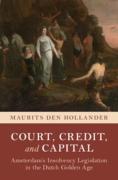
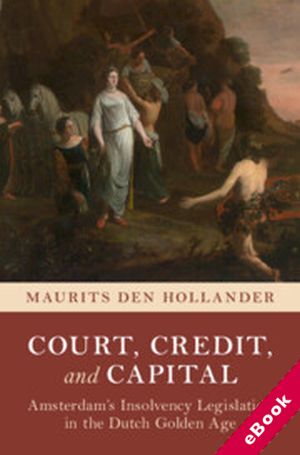
Seventeenth-century Amsterdam was a city of innovations. Explosive economic growth, the expansion of overseas trade, and a high level of religious tolerance sparked great institutional, socio-economic and legal changes, a period generally known as 'the Dutch Golden Age'.
In this book, Maurits den Hollander discusses how insolvency legislation contributed to the rise of a modern commercial order in seventeenth-century Amsterdam. He analyzes the procedure and principles behind Amsterdam's specialised insolvency court (the Desolate Boedelskamer, 1643) from a theoretical perspective as well as through the eyes of citizens whose businesses failed. The Amsterdam authorities created a regulatory environment which solved insolvency more leniently, and thus economically more efficiently, than in previous times or places. Moving beyond the traditional view of insolvency as a moral failure and the debtor as a criminal, the Amsterdam court recognised that business failure was often beyond the insolvent's personal control, and helped restore trust and credit among creditors and debtors.