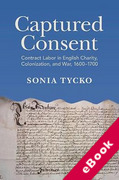
Consent has been celebrated as a guarantor of liberty and self-determination; however, its history suggests a different meaning. In this book, Sonia Tycko reconstructs the coercive role of contracts in early modern English labor. The long-term, long-distance, and high-risk nature of pauper apprenticeships, transatlantic indentured servitude, military conscription, and prisoners of war labor drove some English people to develop consent into a tool of labor coercion. Coercion could constitute valid consent for people whose social position, age, and gender fit the profile of natural laborers. Many subordinates experienced consenting-or the presumption of their consent-as a form of acceptance of, or even submission to, their position.
This book reveals that early modern labor was one of the fields in which ideas of freedom of contract, voluntariness, and enticement developed.