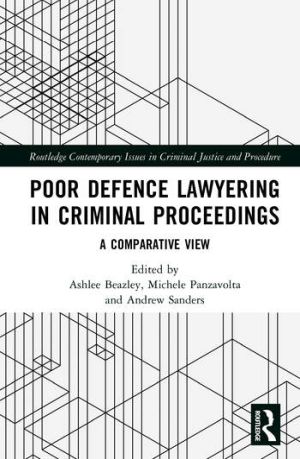
This collection discusses the concept of ‘poor-quality’ criminal defence representation and assistance, so-termed ‘poor lawyering’. It does so from diverse perspectives, including legal and criminological. The work presents an overview of the issue of the quality of legal assistance in criminal proceedings, so allowing a better understanding of the potential limits and problems.
The volume is divided into three parts which, over fourteen chapters, offer analyses of poor lawyering across: national and supranational legal systems, including, Belgium, Germany, Greece, Italy, England & Wales, the United States and the European Court of Human Rights; the specific challenges of poor lawyering, such as, regulation of counsel before the International Criminal Court, through codes of conduct, and in cross-border proceedings within Europe; the individual fault and external pressures of criminal defence lawyers; the ‘missed opportunity’ of pre-charge engagement; the importance of insights from legal and criminological psychology; and the role of neurodivergent defendants in the adaptation of the defence lawyer’s assistance. The collection concludes with a transversal and comparative analysis of the effectiveness of defence and the independence of lawyers.
With contributions from academics and practitioners from a range of backgrounds, the book will be a valuable resource for students, academics, researchers and policy-makers working in the area of Criminal Justice.