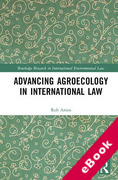
Producing enough food is a basic human priority and a critical challenge in the face of a growing population and the deteriorating ecological health of the planet. Modern agricultural practices promise to maximise the productive efficiency of available land but are one of the main drivers of agro- and biodiversity loss. Agroecology, which places ecological sustainability and diversity at the heart of agriculture, is one response to these challenges. It presents agriculture not only as the process through which food is produced, but as a dynamic socioecological phenomenon that exists through networks comprising natural and human stakeholders at global, national and subnational levels. Drawing on a combination of agroecological and legal literature, this book explores where there is space in international law to pursue agroecology. Using a range of case studies, it demonstrates how concepts, mechanisms and regulatory approaches in the law advance, and can be reformed to further advance, an agroecological legal framework that allows humanity to meet its agricultural needs in a way that protects the natural and cultural diversity that is fundamental to the ecological integrity of the planet.