
The eBooks we sell are sold as a single-user licence and are intended for the end user only.
The sale of some eBooks are restricted to certain countries. To alert you to such restrictions, please select the country of the billing address of your credit or debit card you wish to use for payment.
For further information see https://www.wildy.com/ebook-formats
Once the order is confirmed an e-mail will be sent to you to allow you to download the eBook. For UK purchases this will be automatic. For purchases outside the UK a member of staff will need to confirm the sale. (Staff are available to do this during normal business hours, Mon-Fri 8:30-17:00 UK time)
All eBooks are supplied firm sale and cannot be returned. If you believe there is a fault with your eBook then contact us on ebooks@wildy.com and we will help in resolving the issue. This does not affect your statutory rights.
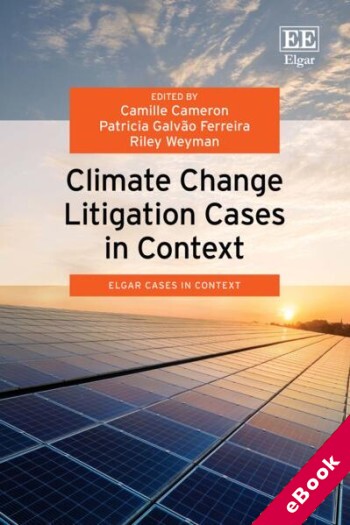
This book provides a timely and detailed analysis of key climate change cases in domestic courts across the globe, examining the procedural, evidentiary, legal and strategic dimensions of the complex climate governance landscape. It reveals how, as the threats of climate change grow and as policy fails to respond, individuals and groups have increasingly been turning to national courts to seek relief and clarity through litigation.
Covering cases from across the Global North and South, chapters explore national, transnational and international implications of litigation. They highlight the diversity of cases and litigants turning to courts to assert, defend, or challenge climate-related duties, including youth, senior and Indigenous groups, as well as climate action NGOs. Expert authors assess the ways in which courts are being called on to hear and decide climate change claims, the strategies that litigants are adopting to advance their claims and the responses of governments, corporations and other defendants.
Researchers and students of environmental law, climate science, corporate liability and climate governance will benefit from this book’s valuable insights. It is also an essential resource for legal practitioners advising litigants in environmental and climate matters, as well as policymakers involved in climate law.










