
The eBooks we sell are sold as a single-user licence and are intended for the end user only.
The sale of some eBooks are restricted to certain countries. To alert you to such restrictions, please select the country of the billing address of your credit or debit card you wish to use for payment.
For further information see https://www.wildy.com/ebook-formats
Once the order is confirmed an e-mail will be sent to you to allow you to download the eBook. For UK purchases this will be automatic. For purchases outside the UK a member of staff will need to confirm the sale. (Staff are available to do this during normal business hours, Mon-Fri 8:30-17:00 UK time)
All eBooks are supplied firm sale and cannot be returned. If you believe there is a fault with your eBook then contact us on ebooks@wildy.com and we will help in resolving the issue. This does not affect your statutory rights.
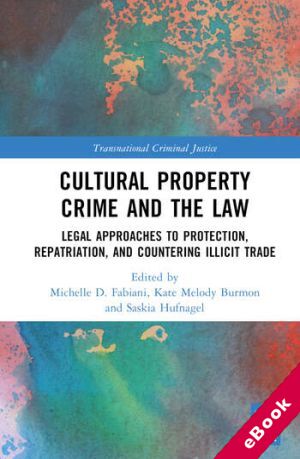
This book explores innovative approaches to using and operating within and around both criminal law and civil law in the detection, investigation, and restitution of illicit cultural property. The volume brings together a wide range of authors who research and work in combatting cultural property crime. It explores the normative tensions and intersections between civil and criminal law and where they complement each other in the field. It focuses on innovative legal solutions to the unique challenges presented when facing a transnational form of crime that must consider varying structures of law and order, as well as a deep understanding of the heritage in question, both in past and the present cultures.
The collection examines what both areas of law contribute to preventing cultural property crime from occurring, holding offenders responsible before the law, and returning objects to their rightful owners and/or places of origin. Combining the perspectives of academics and practitioners, the volume highlights voices from around the globe, using this range of experience to explore new ideas and applications of legal theory and practice to cases involving cultural property crimes.
The book will be of interest to academics and practitioners in cultural property crime in the fields of criminology, law, archaeology, museum studies, political science, economics, and law enforcement.











