The eBooks we sell are sold as a single-user licence and are intended for the end user only.
The sale of some eBooks are restricted to certain countries. To alert you to such restrictions, please select the country of the billing address of your credit or debit card you wish to use for payment.
For further information see https://www.wildy.com/ebook-formats
Once the order is confirmed an e-mail will be sent to you to allow you to download the eBook. For UK purchases this will be automatic. For purchases outside the UK a member of staff will need to confirm the sale. (Staff are available to do this during normal business hours, Mon-Fri 8:30-17:00 UK time)
All eBooks are supplied firm sale and cannot be returned. If you believe there is a fault with your eBook then contact us on ebooks@wildy.com and we will help in resolving the issue. This does not affect your statutory rights.
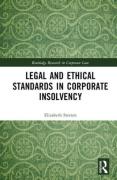
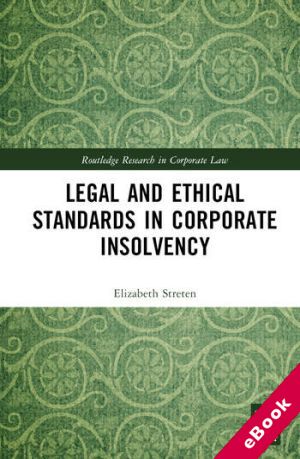
Recent financial crisis and the global financial impacts of the COVID-19 pandemic have brought renewed interest to the regulation and practice of corporate insolvency and restructuring.
Modernisation of the insolvency profession, and the regulation of its practitioners, is a contemporary concern and recent years have seen significant reforms of insolvency law. The success of such reforms can be enhanced through a clear understanding of difficulties faced by the insolvency profession in achieving successful restructuring and insolvency outcomes and through the determination of effective solutions to those difficulties. However, there is limited empirical data to inform the day-to-day practice of insolvency, nor the difficulties experienced by insolvency practitioners in pursing insolvency and restructuring solutions. This book addresses this absence of data and understanding, examining the role and practice of corporate insolvency practitioners and exploring the challenges that they encounter.
Offering an empirical study together with a comparative analysis of the experiences of practitioners around the world, this book facilitates a greater understanding of corporate insolvency practice, confronting a misunderstanding of, and under-confidence in, corporate insolvency practitioners, making it key reading for academics, practitioners and regulators working in the area of corporate insolvency.