
The eBooks we sell are sold as a single-user licence and are intended for the end user only.
The sale of some eBooks are restricted to certain countries. To alert you to such restrictions, please select the country of the billing address of your credit or debit card you wish to use for payment.
For further information see https://www.wildy.com/ebook-formats
Once the order is confirmed an e-mail will be sent to you to allow you to download the eBook. For UK purchases this will be automatic. For purchases outside the UK a member of staff will need to confirm the sale. (Staff are available to do this during normal business hours, Mon-Fri 8:30-17:00 UK time)
All eBooks are supplied firm sale and cannot be returned. If you believe there is a fault with your eBook then contact us on ebooks@wildy.com and we will help in resolving the issue. This does not affect your statutory rights.
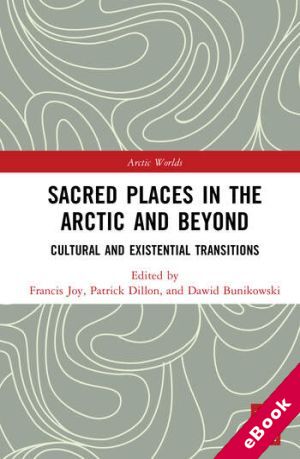
Sacred Places in the Arctic and Beyond brings together indigenous and non-indigenous scholars, rightsholders, and practitioners to explore the status and management of sacred places, which are important as both tangible and intangible cultural heritage. It acknowledges the critical functions and roles that sacred places play in connection with local people, traditions, beliefs, and practices, as identity markers, places of cultural transmission and memory, and locations that support ecosystems and biodiversity.
Four chapters present case studies from the Arctic, and four more widen the geographical coverage to North America, South America, Africa and Europe, each describing the cultural contexts and Indigenous cosmologies of sacred places in their respective regions. The studies raise issues of access to sacred places, destruction and disruption caused by extractive industries and tourism, and implications of these challenges for their management. The book concludes with three chapters that call for policy reappraisals. They address the problem of how Western-orientated discourses and organisational structures frame legislation about, and management of, sacred places in ways which are seldom compatible with how Indigenous people understand these places and engage with them. Major themes from the case studies are integrated with ideas from cultural ecology and legal pluralism into a framework to inform future policy.










