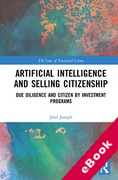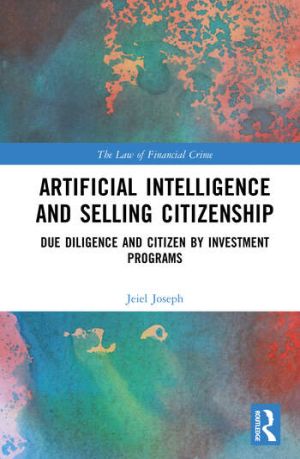
This book offers a critical examination of the due diligence frameworks employed by select Commonwealth Island Citizenship by Investment (CBI) programs, where an investment of as little as USD $200,000 can secure a second passport, granting visa-free access to numerous countries. While these programs have positioned themselves as lucrative avenues for economic development, they have drawn sharp international criticism for their susceptibility to financial crime.< /p>
The study delves into the consequences of the weaknesses in the frameworks, highlighting how inadequate regulatory oversight can erode investor trust, invite international sanctions, and jeopardise the long-term economic sustainability of CBI programs. Through a financial crime lens, it explores how these shortcomings have turned CBI programs into potentially high-risk ventures, attracting scrutiny from international regulators, law enforcement agencies, and global watchdogs, in the region and beyond. It discusses how the European Union has emerged as a leading voice in scrutinising the vulnerabilities of CBI programs, regularly highlighting the inadequacy of their due diligence practices and their susceptibility to misuse in facilitating financial crimes. With emerging technologies such as AI offering transformative solutions, it is argued here that the failure to integrate these tools into due diligence processes represents a missed opportunity to address the inherent vulnerabilities of the CBI industry. This critical shortfall highlights the urgent need to bolster due diligence practices, ensuring they are equipped to combat the sophisticated methods employed by financial criminals.
The book will be of interest to academics, researchers and policy makers working in the areas of Financial Crime, In ternational Law, Global Security, AI and Law, Immigration and Citizenship Law.