The eBooks we sell are sold as a single-user licence and are intended for the end user only.
The sale of some eBooks are restricted to certain countries. To alert you to such restrictions, please select the country of the billing address of your credit or debit card you wish to use for payment.
For further information see https://www.wildy.com/ebook-formats
Once the order is confirmed an e-mail will be sent to you to allow you to download the eBook. For UK purchases this will be automatic. For purchases outside the UK a member of staff will need to confirm the sale. (Staff are available to do this during normal business hours, Mon-Fri 8:30-17:00 UK time)
All eBooks are supplied firm sale and cannot be returned. If you believe there is a fault with your eBook then contact us on ebooks@wildy.com and we will help in resolving the issue. This does not affect your statutory rights.
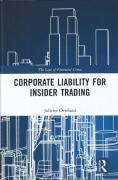
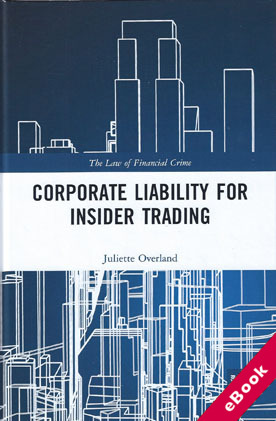
Corporate Liability for Insider Trading examines the reasons why there have been no successful criminal prosecutions, or successful contested civil proceedings, against corporations for insider trading, and analyses the various rationales for prohibiting insider trading. It reviews the insider trading regulatory regime and describes its key features, using both national and international examples.
The book inspects a variety of criminal and civil models of corporate liability and considers the historical and theoretical basis on which corporations are subject to insider trading laws. The specific elements of the insider trading offence and the manner in which they are attributed to corporations are analysed in detail. Defences available to corporations such as Chinese Walls are explored, and the obligations that are imposed on businesses as a result of insider trading regulation – security trading policies and notifications, continuous disclosure obligations, and duties concerning conflicts of interest – are detailed and examined.
The book concludes with reform proposals intended to remedy the many legal and commercial difficulties identified, in order that a new regulatory regime might be adopted to better serve regulators, businesses, investors, and the broader market. This volume addresses these corporate law topics and will be of interest to researchers, academics, financial institution compliance officers, investment bankers, corporate and comparative lawyers, and students and scholars in the fields of commercial law, corporate law, financial crime, company law, and white collar crime.