
Wildy Logo
(020) 7242 5778
enquiries@wildy.com

Book of the Month

Cover of A Guide to the DIAC Arbitration Rules

A Guide to the DIAC Arbitration Rules

Price: £150.00

Planning Law:
A Practitioner's
Handbook 2nd ed


 William Webster, Robert Weatherley


Welcome to Wildys

Watch


Corporate Insolvency Practice:
Litigation, Procedure
and Precedents 3rd ed


 Mark Watson-Gandy


Offers for Newly Called Barristers & Students

Special Discounts for Newly Called & Students

Read More ...


Secondhand & Out of Print

Browse Secondhand Online

Read More...


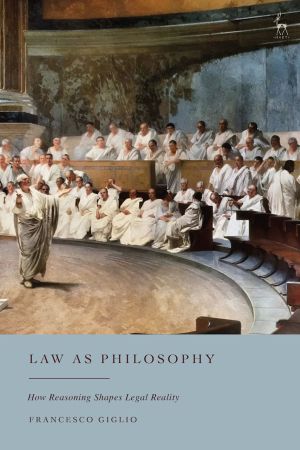
Law as Philosophy: How Reasoning Shapes Legal Reality


ISBN13: 9781048002454
To be Published: April 2027
Publisher: Hart Publishing
Country of Publication: UK
Format: Hardback
Price: £110.00


In this book, probabilism is presented from the perspective of the humanities, as based upon imaginative reality, and is connected to the two concepts of history and persuasion.

Law is not about truth, but about probability. Lacking a full knowledge of the facts, jurists support the gaps in their argumentation with their own imagination. Thus, the legal discourse is a hybrid of factual reality and what is called here 'imaginative reality'. Yet legal probabilism is not only about 'trials by mathematics'.

Law is an historical phenomenon influenced by several factors. Why do legal norms change so little through the millennia? Because of the metaphorical and analogical nature of legal reasoning. The significance of legal words expands constantly following historical developments and the jurist's need to persuade the addressee. The role of imagination is such that the jurist becomes a jurist-poet. In Greek, poietes means creator. The jurist-poet creates an inter-subjective, shared reality that is constructed anew in each interaction with other parties.

The persona of the jurist-poet is developed here from an historical, theoretical and philosophical perspective. Starting from Roman law and the influence of Greek philosophy, its evolution is followed through the centuries until modern times focussing on the theory of imagination applied in Italian Humanism (e.g. Salutati and Vico) and on German existentialism (e.g. Nietzsche, Heidegger and Grassi).


Subjects:
Jurisprudence
Contents:
Preface
Introduction

Part One: Historical Prolegomena to Legal Noetics
Introduction
1.The causa Curiana
2. The Role of Greek Philosophy
3. How Did the Romans Find the Law?
4. The Methodology in the Sources of the Roman Jurists
Conclusions

Part Two: Law as Philosophy
Introduction: Is Legal Truth a Metaphysical Truth?
5. Law as Philosophy
6. How Humanistic Philosophy Can Help to Develop a Theory of Legal Reasoning
7. The Role of Language in the Development of Legal Reasoning
8. The World According to Descartes
9. Giambattista Vico: the last Humanist
10. Italian Humanism in Modern Philosophy
Conclusions

Part Three: The Jurist as a Poet
Introduction
11. Some Observations on Rhetoric, Poetry, and Legal Reasoning
12. Probabilistic Reasoning and Imagination in Law
13. Friedrich Nietzsche (1844-1900) and the Different Forms of Reality
14. Law as Creation and Interpretation
Conclusions









