
The eBooks we sell are sold as a single-user licence and are intended for the end user only.
The sale of some eBooks are restricted to certain countries. To alert you to such restrictions, please select the country of the billing address of your credit or debit card you wish to use for payment.
For further information see https://www.wildy.com/ebook-formats
Once the order is confirmed an e-mail will be sent to you to allow you to download the eBook. For UK purchases this will be automatic. For purchases outside the UK a member of staff will need to confirm the sale. (Staff are available to do this during normal business hours, Mon-Fri 8:30-17:00 UK time)
All eBooks are supplied firm sale and cannot be returned. If you believe there is a fault with your eBook then contact us on ebooks@wildy.com and we will help in resolving the issue. This does not affect your statutory rights.
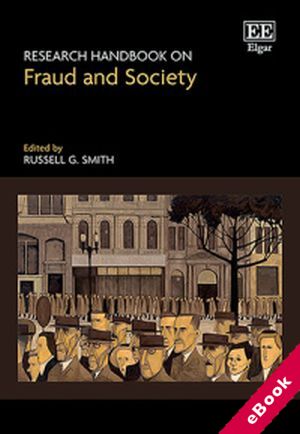
This insightful Research Handbook comprehensively analyses the current state of research on fraud and society, including chapters written by internationally recognised scholars and practitioners.
With a particular focus on digital technology, it explores how to enhance fraud research, minimise criminogenic environments, improve early detection of fraud, and support victims. The Handbook considers how offenders’ motivations and justifications for acting dishonestly have altered, the changes that have taken place in the experiences of victims of fraud, and how society has responded to the problem through the use of criminal justice action. Authors discuss empirical evidence on the nature, extent, and trends in economic crime to demonstrate various approaches to preventing and controlling fraud. Presenting international case studies which cover critical topics such as cyber scams, embezzlement, consumer fraud, and academic misconduct, this Research Handbook examines the most effective ways to mitigate and respond to fraud’s harmful impact on society.
This is a valuable resource for scholars and students of economic crime, criminology, economics and finance, forensic psychology, sociology, and law. It is also greatly beneficial to fraud investigators and policymakers.











