
The eBooks we sell are sold as a single-user licence and are intended for the end user only.
The sale of some eBooks are restricted to certain countries. To alert you to such restrictions, please select the country of the billing address of your credit or debit card you wish to use for payment.
For further information see https://www.wildy.com/ebook-formats
Once the order is confirmed an e-mail will be sent to you to allow you to download the eBook. For UK purchases this will be automatic. For purchases outside the UK a member of staff will need to confirm the sale. (Staff are available to do this during normal business hours, Mon-Fri 8:30-17:00 UK time)
All eBooks are supplied firm sale and cannot be returned. If you believe there is a fault with your eBook then contact us on ebooks@wildy.com and we will help in resolving the issue. This does not affect your statutory rights.
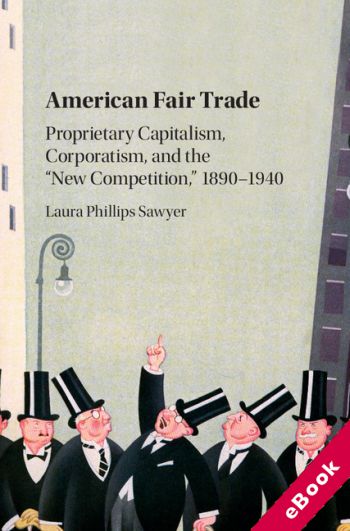
Rather than viewing the history of American capitalism as the unassailable ascent of large-scale corporations and free competition, American Fair Trade argues that trade associations of independent proprietors lobbied and litigated to reshape competition policy to their benefit.
At the turn of the twentieth century, this widespread fair trade movement borrowed from progressive law and economics, demonstrating a persistent concern with market fairness - not only fair prices for consumers but also fair competition among businesses. Proponents of fair trade collaborated with regulators to create codes of fair competition and influenced the administrative state's public-private approach to market regulation.
New Deal partnerships in planning borrowed from those efforts to manage competitive markets, yet ultimately discredited the fair trade model by mandating economy-wide trade rules that sharply reduced competition. Laura Phillips Sawyer analyzes how these efforts to reconcile the American tradition of a well-regulated society with the legacy of Gilded Age of laissez-faire capitalism produced the modern American regulatory state.











