
The eBooks we sell are sold as a single-user licence and are intended for the end user only.
The sale of some eBooks are restricted to certain countries. To alert you to such restrictions, please select the country of the billing address of your credit or debit card you wish to use for payment.
For further information see https://www.wildy.com/ebook-formats
Once the order is confirmed an e-mail will be sent to you to allow you to download the eBook. For UK purchases this will be automatic. For purchases outside the UK a member of staff will need to confirm the sale. (Staff are available to do this during normal business hours, Mon-Fri 8:30-17:00 UK time)
All eBooks are supplied firm sale and cannot be returned. If you believe there is a fault with your eBook then contact us on ebooks@wildy.com and we will help in resolving the issue. This does not affect your statutory rights.
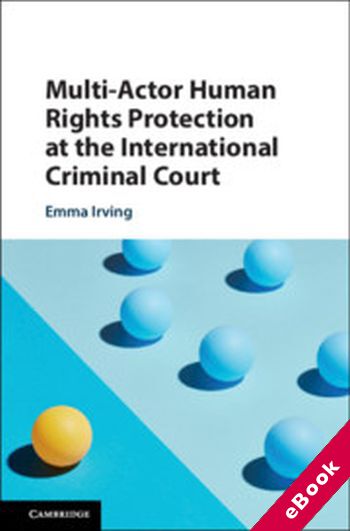
Conversations about the involvement of States in the workings of the International Criminal Court often focus on the role of State cooperation in enabling the ICC to carry out criminal trials. However, there is a dimension to this cooperation that is underexplored. Whenever the ICC relies on the assistance of States, or States otherwise become involved in its functioning, the human rights of accused and witnesses involved in proceedings may be adversely affected. The simultaneous involvement of the ICC, ICC States Parties, and the ICC host State - whilst essential and unavoidable - can insert ambiguity and uncertainty into the protection of individuals, leaving the door open for human rights violations.
This book explores this phenomenon of multi-actor human rights protection at the ICC. By setting out the relevant obligations of the different actors, the book highlights potential problems in human rights protection and proposes ways to mitigate them.











