The eBooks we sell are sold as a single-user licence and are intended for the end user only.
The sale of some eBooks are restricted to certain countries. To alert you to such restrictions, please select the country of the billing address of your credit or debit card you wish to use for payment.
For further information see https://www.wildy.com/ebook-formats
Once the order is confirmed an e-mail will be sent to you to allow you to download the eBook. For UK purchases this will be automatic. For purchases outside the UK a member of staff will need to confirm the sale. (Staff are available to do this during normal business hours, Mon-Fri 8:30-17:00 UK time)
All eBooks are supplied firm sale and cannot be returned. If you believe there is a fault with your eBook then contact us on ebooks@wildy.com and we will help in resolving the issue. This does not affect your statutory rights.
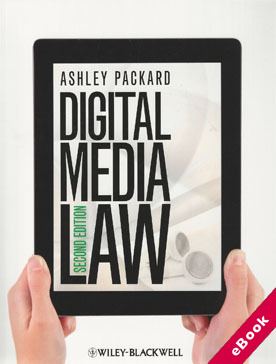
Digital Media Law 2nd ed is an invaluable resource for the latest legal considerations affecting media in today's increasingly digitized world.
In the aftermath of our global shift to digital media, professional and nonprofessional communicators alike struggle to keep pace with legal developments related to intellectual property use, privacy rights, defamation, and freedom of expression. Reflecting the latest changes in this rapidly evolving field, Digital Media Law 2nd ed provides an essential guide to these critical issues and others surrounding contemporary media law.
The second edition has been entirely updated and expanded to include discussions of new protections for corporate political speech, student expression, advertising, video games, public video camera use, net neutrality, and eAccessibility.
It explains laws and regulations recently passed to address libel tourism, cyberstalking, sexting, and online privacy. New case studies describe conflicts over Wikileaks' posts of classified information, file sharing, music licensing, and the claims that social media sites assert over user-posted intellectual property.
Together, these updates expand on traditional communication law concepts, presented and illustrated using familiar examples drawn from contemporary digital media. Salient areas covered include First Amendment rights, information access and protection, telecommunications and Internet regulation, copyright, trademark, libel, privacy, commercial speech, jurisdiction, and choice of law.
An accompanying website providing updated case studies, court decisions, and a wealth of additional resources is available at www.digitalmedialaw.us.