The eBooks we sell are sold as a single-user licence and are intended for the end user only.
The sale of some eBooks are restricted to certain countries. To alert you to such restrictions, please select the country of the billing address of your credit or debit card you wish to use for payment.
For further information see https://www.wildy.com/ebook-formats
Once the order is confirmed an e-mail will be sent to you to allow you to download the eBook. For UK purchases this will be automatic. For purchases outside the UK a member of staff will need to confirm the sale. (Staff are available to do this during normal business hours, Mon-Fri 8:30-17:00 UK time)
All eBooks are supplied firm sale and cannot be returned. If you believe there is a fault with your eBook then contact us on ebooks@wildy.com and we will help in resolving the issue. This does not affect your statutory rights.
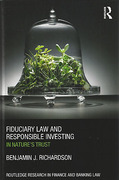
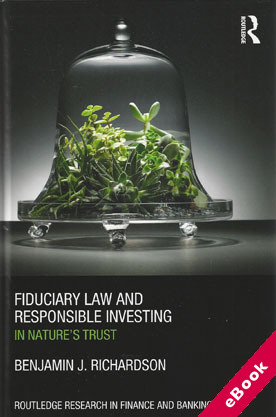
This book is about fiduciary law's influence on the financial economy's environmental performance, focusing on how the law affects responsible investing and considering possible legal reforms to shift financial markets closer towards sustainability.
Fiduciary law governs how trustees, fund managers or other custodians administer the investment portfolios owned by beneficiaries. Written for a diverse audience, not just legal scholars, the book examines in a multi-jurisdictional context an array of philosophical, institutional and economic issues that have shaped the movement for responsible investing and its legal framework.
Fiduciary law has acquired greater influence in the financial economy in tandem with the extraordinary recent growth of institutional funds such as pension plans and insurance company portfolios. While the fiduciary prejudice against responsible investing has somewhat waned in recent years, owing mainly to reinterpretations of fiduciary and trust law, significant barriers remain.
This book advances the notion of 'nature's trust' to metaphorically signal how fiduciary responsibility should accommodate society's dependence on long-term environmental well-being. Financial institutions, managing vast investment portfolios on behalf of millions of beneficiaries, should manage those investments with regard to the broader social interest in sustaining ecological health. Even for their own financial self-interest, investors over the long-term should benefit from maintaining nature's capital. We should expect everyone to act in nature's trust, from individual funds to market regulators.
The ancient public trust doctrine could be refashioned for stimulating this change, and sovereign wealth funds should take the lead in pioneering best practices for environmentally responsible investing.