The eBooks we sell are sold as a single-user licence and are intended for the end user only.
The sale of some eBooks are restricted to certain countries. To alert you to such restrictions, please select the country of the billing address of your credit or debit card you wish to use for payment.
For further information see https://www.wildy.com/ebook-formats
Once the order is confirmed an e-mail will be sent to you to allow you to download the eBook. For UK purchases this will be automatic. For purchases outside the UK a member of staff will need to confirm the sale. (Staff are available to do this during normal business hours, Mon-Fri 8:30-17:00 UK time)
All eBooks are supplied firm sale and cannot be returned. If you believe there is a fault with your eBook then contact us on ebooks@wildy.com and we will help in resolving the issue. This does not affect your statutory rights.
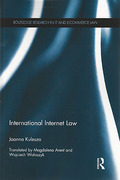
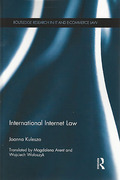
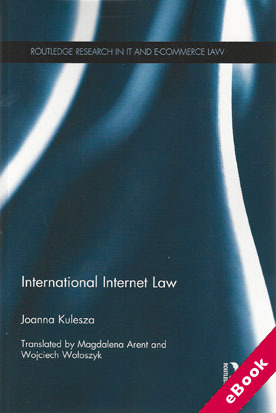
This book discusses the international legal issues underlying Internet Governance and proposes an international solution to its problems. The book encompasses a wide spectrum of current debate surrounding the governance of the internet and focuses on the areas and issues which urgently require attention from the international community in order to sustain the proper functioning of the global network that forms the foundation of our information fuelled society. Among the topics discussed are international copyright protection, state responsibility for cyber-attacks (cyberterrorism), and international on-line privacy protection.
Taking a comparative approach by examining how different jurisdictions such as the United States, the European Union, China and Singapore have attempted various solutions to the problem of Internet Governance, the author offers a practical solution to the problem and is a proponent of International Internet Law. Kulesza suggests that just as in the case of International Environmental Law, an Internet Framework Convention could shape the starting point for international cooperation and lead to a clear, contractual division of state jurisdictional competences. International Internet Law is of particular interest to legal scholars engaged with the current challenges in international law and international relations, as well as students of law, international relations and political science. The issues discussed in the book are also relevant to journalists and other media professionals, facing the challenges of analyzing current international developments in cyberspace.