The eBooks we sell are sold as a single-user licence and are intended for the end user only.
The sale of some eBooks are restricted to certain countries. To alert you to such restrictions, please select the country of the billing address of your credit or debit card you wish to use for payment.
For further information see https://www.wildy.com/ebook-formats
Once the order is confirmed an e-mail will be sent to you to allow you to download the eBook. For UK purchases this will be automatic. For purchases outside the UK a member of staff will need to confirm the sale. (Staff are available to do this during normal business hours, Mon-Fri 8:30-17:00 UK time)
All eBooks are supplied firm sale and cannot be returned. If you believe there is a fault with your eBook then contact us on ebooks@wildy.com and we will help in resolving the issue. This does not affect your statutory rights.
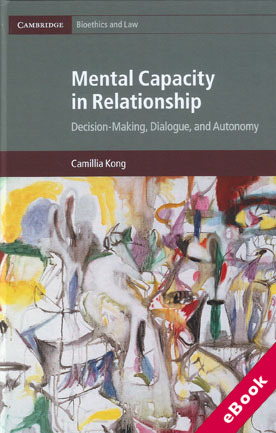
Recent legal developments challenge how valid the concept of mental capacity is in determining whether individuals with impairments can make decisions about their care and treatment.
Kong defends a concept of mental capacity, but argues that such assessments must consider how relationships and dialogue can enable or disable the decision-making abilities of these individuals. This is thoroughly investigated using an interdisciplinary approach that combines philosophy and legal analysis of the law in England and Wales, the European Court of Human Rights, and the United Nations Convention on the Rights of Persons with Disabilities.
By exploring key concepts underlying mental capacity, the investigation concludes that both primary relationships, as well as capacity assessments themselves, must display key competencies in order to ensure that autonomy skills are promoted and encouraged.
This ultimately provides scope for justifiable interventions into disabling relationships and articulates the dialogical practices that help better situate, interpret, and understand the choices and actions of individuals with impairments.