
The eBooks we sell are sold as a single-user licence and are intended for the end user only.
The sale of some eBooks are restricted to certain countries. To alert you to such restrictions, please select the country of the billing address of your credit or debit card you wish to use for payment.
For further information see https://www.wildy.com/ebook-formats
Once the order is confirmed an e-mail will be sent to you to allow you to download the eBook. For UK purchases this will be automatic. For purchases outside the UK a member of staff will need to confirm the sale. (Staff are available to do this during normal business hours, Mon-Fri 8:30-17:00 UK time)
All eBooks are supplied firm sale and cannot be returned. If you believe there is a fault with your eBook then contact us on ebooks@wildy.com and we will help in resolving the issue. This does not affect your statutory rights.
The United States has been experiencing an energy transition for over four decades, and now - thanks to the Clean Power Plan of the Obama Administration and the Paris climate agreement - a clean energy future is moving closer to reality.
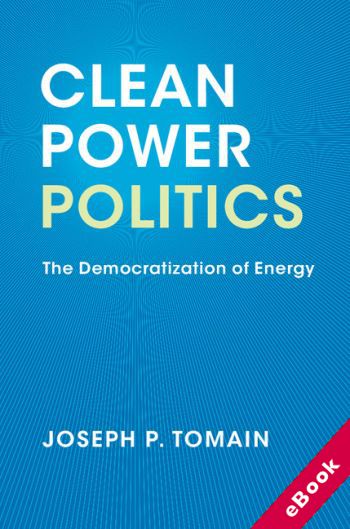
In Clean Power Politics, Joseph Tomain describes how clean energy policies have been developed and, more importantly, what's necessary for a successful transition to a clean energy future, including technological innovation, new business models, and regulatory reforms. The energy system of the future will minimize the environmental costs of traditional energy production and consumption, and emphasize expanded use of natural resources and energy efficiency. Because many new energy technologies can be produced and consumed at smaller scales, they will shift decision-making power away from traditional utilities and empower consumers to make energy choices about consumption and price. In this way, a clean energy future embodies a democratization of energy.










