The eBooks we sell are sold as a single-user licence and are intended for the end user only.
The sale of some eBooks are restricted to certain countries. To alert you to such restrictions, please select the country of the billing address of your credit or debit card you wish to use for payment.
For further information see https://www.wildy.com/ebook-formats
Once the order is confirmed an e-mail will be sent to you to allow you to download the eBook. For UK purchases this will be automatic. For purchases outside the UK a member of staff will need to confirm the sale. (Staff are available to do this during normal business hours, Mon-Fri 8:30-17:00 UK time)
All eBooks are supplied firm sale and cannot be returned. If you believe there is a fault with your eBook then contact us on ebooks@wildy.com and we will help in resolving the issue. This does not affect your statutory rights.
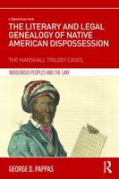
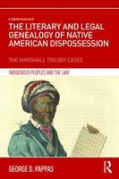
The Literary and Legal Genealogy of Native American Dispossession offers a unique interpretation of how literary and public discourses influenced three U.S. Supreme Court Rulings written by Chief Justice John Marshall with respect to Native Americans. These cases, Johnson v. M'Intosh (1823), Cherokee Nation v. Georgia (1831) and Worcester v. Georgia (1832), collectively known as the Marshall Trilogy, have formed the legal basis for the dispossession of indigenous populations throughout the Commonwealth.
The Trilogy cases are usually approached as 'pure' legal judgments. This book maintains, however, that it was the literary and public discourses from the early sixteenth through to the early nineteenth centuries that established a discursive tradition which, in part, transformed the American Indians from owners to 'mere occupants' of their land. Exploring the literary genesis of Marshall's judgments, George Pappas draws on the work of Michel Foucault, Edward Said and Homi Bhabha, to analyze how these formative U.S. Supreme Court rulings blurred the distinction between literature and law.