
The eBooks we sell are sold as a single-user licence and are intended for the end user only.
The sale of some eBooks are restricted to certain countries. To alert you to such restrictions, please select the country of the billing address of your credit or debit card you wish to use for payment.
For further information see https://www.wildy.com/ebook-formats
Once the order is confirmed an e-mail will be sent to you to allow you to download the eBook. For UK purchases this will be automatic. For purchases outside the UK a member of staff will need to confirm the sale. (Staff are available to do this during normal business hours, Mon-Fri 8:30-17:00 UK time)
All eBooks are supplied firm sale and cannot be returned. If you believe there is a fault with your eBook then contact us on ebooks@wildy.com and we will help in resolving the issue. This does not affect your statutory rights.
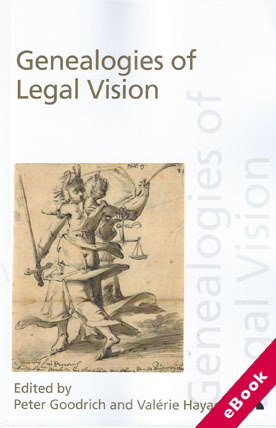
This collection focuses on the history of legal emblems and the genealogy of law’s visual structures. The growing interest in law and the visual has tended to focus in a somewhat lazy fashion upon film and law, rather than addressing the actual history of law’s regimes of visual control.
But early modern lawyers, civilian and common alike, developed their very own ars iuris or art of law. A variety of legal disciplines always relied in part upon the use of visual representations, upon images and statuary to convey authority and sovereign norm.
Military, religious, administrative and legal images found juridical codification and expression in collections of signs of office, in heraldic codes, in genealogical devices, and then finally in the juridical invention in the mid-sixteenth century of the legal emblem book.
This book traces the complex lineage of the legal emblem and argues that the mens emblematica of the humanist lawyers was the inauguration of a visiocratic regime that continues in significant part into the present and multiple technologies of vision.
Bringing together leading experts on the history of legal emblems to address the critical question of why it was lawyers who authored the emblemata, and correlatively, what was the relation and role of these visual depictions of norms to the practice and performance of law, this collection provides a ground-breaking account of the long relationship between visibility, meaning and normativity.











