The eBooks we sell are sold as a single-user licence and are intended for the end user only.
The sale of some eBooks are restricted to certain countries. To alert you to such restrictions, please select the country of the billing address of your credit or debit card you wish to use for payment.
For further information see https://www.wildy.com/ebook-formats
Once the order is confirmed an e-mail will be sent to you to allow you to download the eBook. For UK purchases this will be automatic. For purchases outside the UK a member of staff will need to confirm the sale. (Staff are available to do this during normal business hours, Mon-Fri 8:30-17:00 UK time)
All eBooks are supplied firm sale and cannot be returned. If you believe there is a fault with your eBook then contact us on ebooks@wildy.com and we will help in resolving the issue. This does not affect your statutory rights.
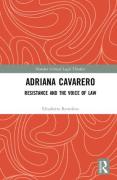
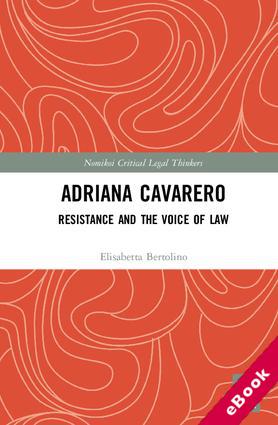
Critical legal scholars have made us aware that law is made up not only of rules but also of language. But who speaks the language of law? And can one lawfully speak in one’s own voice? For the Italian philosopher Adriana Cavarero, to answer these questions we must not separate who is speaking from the very act of speaking; and we must, moreover, recuperate the material singularity and relationality of the mouth that speaks.
Drawing on Cavarero’s work, this book focuses on the potentiality of the voice for resisting law’s sovereign structures. For Cavarero, it is the voice that expresses one’s living and unrepeatable singularity in a way that cannot be subsumed by the universalities and standards of law. The voice is essentially a material and singular passage of air and vibration that necessarily reveals one’s uniqueness in relationality. Speaking discloses this uniqueness, and so of one’s vulnerability. It therefore leads to possibilities of resistance that, here, bring a fresh approach to longstanding legal theoretical concerns with singularity, ethics and justice.