
The eBooks we sell are sold as a single-user licence and are intended for the end user only.
The sale of some eBooks are restricted to certain countries. To alert you to such restrictions, please select the country of the billing address of your credit or debit card you wish to use for payment.
For further information see https://www.wildy.com/ebook-formats
Once the order is confirmed an e-mail will be sent to you to allow you to download the eBook. For UK purchases this will be automatic. For purchases outside the UK a member of staff will need to confirm the sale. (Staff are available to do this during normal business hours, Mon-Fri 8:30-17:00 UK time)
All eBooks are supplied firm sale and cannot be returned. If you believe there is a fault with your eBook then contact us on ebooks@wildy.com and we will help in resolving the issue. This does not affect your statutory rights.
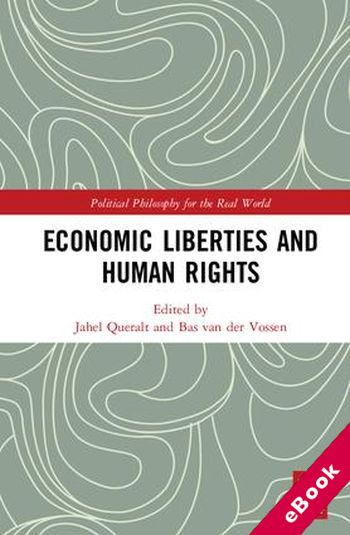
The status of economic liberties remains a serious lacuna in the theory and practice of human rights. Should a minimally just society protect the freedoms to sell, save, profit and invest? Is being prohibited to run a business a human rights violation? While these liberties enjoy virtually no support from the existing philosophical theories of human rights and little protection by the international human rights law, they are of tremendous importance in the lives of individuals, and particularly the poor. Like most individual liberties, economic liberties increase our ability to lead our own life. When we enjoy them, we can choose the occupational paths that best fit us and, in so doing, define who they are in relation to others. Furthermore, in the absence of good jobs, economic liberties allow us to create an alternative path to subsistence. This is critical for the millions of working poor in developing countries who earn their livelihoods by engaging in independent economic activities. Insecure economic liberties leave them vulnerable to harassment, bribery and other forms of abuse from middlemen and public officials. This book opens a debate about the moral and legal status of economic liberties as human rights. It brings together political and legal theorists working in the domain of human rights and global justice, as well as people engaged in the practice of human rights, to engage in both foundational and applied issues concerning these questions.











