
The eBooks we sell are sold as a single-user licence and are intended for the end user only.
The sale of some eBooks are restricted to certain countries. To alert you to such restrictions, please select the country of the billing address of your credit or debit card you wish to use for payment.
For further information see https://www.wildy.com/ebook-formats
Once the order is confirmed an e-mail will be sent to you to allow you to download the eBook. For UK purchases this will be automatic. For purchases outside the UK a member of staff will need to confirm the sale. (Staff are available to do this during normal business hours, Mon-Fri 8:30-17:00 UK time)
All eBooks are supplied firm sale and cannot be returned. If you believe there is a fault with your eBook then contact us on ebooks@wildy.com and we will help in resolving the issue. This does not affect your statutory rights.
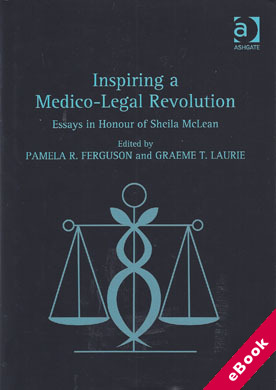
This book marks the retirement of Professor Sheila McLean, whose contribution to the discipline of medical law has been truly ground breaking.
As one of the pioneers of the discipline, Sheila McLean inspired a revolution in the ways in which lawyers, doctors, courts and patients perceive the relationship between medicine and the law. The first International Bar Association Professor of Law and Ethics in Medicine, she has worked tirelessly to champion the importance of lawa (TM)s role in regulating medicine and protecting patientsa (TM) rights.
The span in content of this book reflects the range of contributions that Professor McLean has herself made. Her work gave direction and shape to a new field of study at a time when few questioned the authority of medicine or thought much about the plight of the patient.
This collection brings together 21 leading scholars in healthcare law and ethics to honour the depth and significance of her contribution. Including authors from the US, Australia, Canada and New Zealand, the contributions cover areas as diverse as start and end of life, reproductive rights and termination of pregnancy, autonomy of patients, the protection of vulnerable patient groups, and the challenges posed by new technologies.










