The eBooks we sell are sold as a single-user licence and are intended for the end user only.
The sale of some eBooks are restricted to certain countries. To alert you to such restrictions, please select the country of the billing address of your credit or debit card you wish to use for payment.
For further information see https://www.wildy.com/ebook-formats
Once the order is confirmed an e-mail will be sent to you to allow you to download the eBook. For UK purchases this will be automatic. For purchases outside the UK a member of staff will need to confirm the sale. (Staff are available to do this during normal business hours, Mon-Fri 8:30-17:00 UK time)
All eBooks are supplied firm sale and cannot be returned. If you believe there is a fault with your eBook then contact us on ebooks@wildy.com and we will help in resolving the issue. This does not affect your statutory rights.
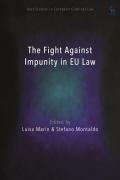
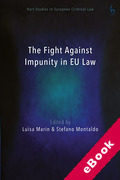
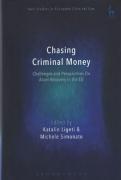
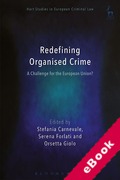
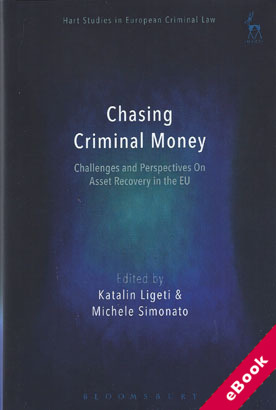
The fight against dirty money is not a new topic, nor a recent problem. It has existed within international and national agendas since the 1980s.
Nonetheless, the evolving complexity of criminal skills and networks; the increasingly global dimension of crime; the financial crisis; and the alleged unsatisfactory results of the efforts hitherto undertaken, impose to re-discuss some questions.
This book addresses several issues concerning the reasons, objectives and scope of national and supranational strategies targeting criminal money, as well as the concrete modalities to overcome the obstacles in fighting it. The objective is to explore where the EU stands and where it ought to go, providing useful input for policy makers and further research.
The EU has indeed the potential to be at the forefront in the international context. Nevertheless, the problems are not limited to the EU area, and assets - particularly money - cross EU borders much more easily than persons do.
The reflections developed in the chapters, therefore, aim at going beyond these EU borders. The book is divided into two parts. The first one focuses on the core of asset recovery policies, namely forfeiture laws, and explores in particular some issues concerning the respect of fundamental rights.
The second part addresses other problematic aspects related to the asset recovery process, such as the return of assets to victim countries, the cross-border investigations on dirty money, and the social use of confiscated assets.