
The eBooks we sell are sold as a single-user licence and are intended for the end user only.
The sale of some eBooks are restricted to certain countries. To alert you to such restrictions, please select the country of the billing address of your credit or debit card you wish to use for payment.
For further information see https://www.wildy.com/ebook-formats
Once the order is confirmed an e-mail will be sent to you to allow you to download the eBook. For UK purchases this will be automatic. For purchases outside the UK a member of staff will need to confirm the sale. (Staff are available to do this during normal business hours, Mon-Fri 8:30-17:00 UK time)
All eBooks are supplied firm sale and cannot be returned. If you believe there is a fault with your eBook then contact us on ebooks@wildy.com and we will help in resolving the issue. This does not affect your statutory rights.
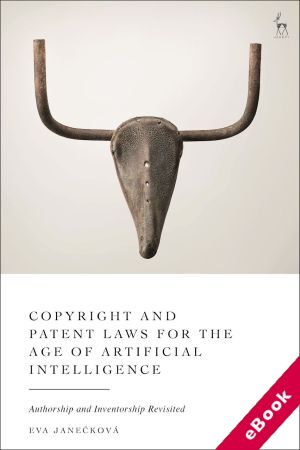
This book responds to the need to distinguish human creations from those produced by AI. It does so by tracing human attributes of authorship and inventorship in statutory requirements for protection and ownership in European copyright and patent laws.
Its main contribution lies in exposing shortcomings in how the laws are applied in the UK, Germany, and France. It shows that the human origin of creations is traditionally inferred from their expressive form or technical character. Given the advancements in AI, such inferences are no longer legitimate. What is more, these shortcomings may eventually lead to granting copyright or patent protection where none is lawfully permitted or sufficiently justified. To remedy the situation, this book offers doctrinal and conceptual amendments and proposes law reforms to implement them.
This book guides authorities, practitioners, and students through the main arguments of the debate concerning copyright and patents for objects entirely or partly generated by AI. It also makes original contributions to advance the ongoing academic and policy debates on AI and intellectual property law.










