
The eBooks we sell are sold as a single-user licence and are intended for the end user only.
The sale of some eBooks are restricted to certain countries. To alert you to such restrictions, please select the country of the billing address of your credit or debit card you wish to use for payment.
For further information see https://www.wildy.com/ebook-formats
Once the order is confirmed an e-mail will be sent to you to allow you to download the eBook. For UK purchases this will be automatic. For purchases outside the UK a member of staff will need to confirm the sale. (Staff are available to do this during normal business hours, Mon-Fri 8:30-17:00 UK time)
All eBooks are supplied firm sale and cannot be returned. If you believe there is a fault with your eBook then contact us on ebooks@wildy.com and we will help in resolving the issue. This does not affect your statutory rights.
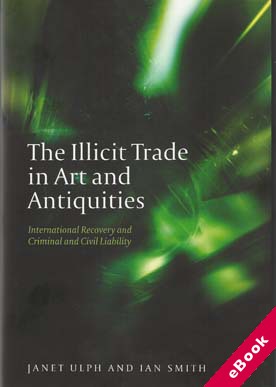
This new text provides practical guidance on the modern law relating to cultural objects which have been stolen, looted, or illegally exported.
It explains how English criminal law principles, including money laundering measures, apply to those who deal in cultural objects in a domestic or international setting. It discusses the recovery of works of art and antiquities in the English courts where there are competing claims between private individuals, or between individuals and the UK Government or a foreign State.
Significantly, this text also provides an exposition of the law where a British law enforcement agency, or a foreign law enforcement agency or court, is involved in the course of criminal or civil proceedings in an English court.
The growth of relevant international instruments, which include not only those devoted to the protection of mankind's cultural heritage but also those concerned with money laundering and serious organised crime, provide a backdrop to this discussion.
The UK's ratification of the UNESCO Convention on Means of Prohibiting and Preventing the Illicit Import, Export and Transfer of Ownership of Cultural Property 1970 in 2002 is considered. The problems posed in attempting to curb trafficking in art and antiquities are explored and the effectiveness of the current law is analysed.










