
The eBooks we sell are sold as a single-user licence and are intended for the end user only.
The sale of some eBooks are restricted to certain countries. To alert you to such restrictions, please select the country of the billing address of your credit or debit card you wish to use for payment.
For further information see https://www.wildy.com/ebook-formats
Once the order is confirmed an e-mail will be sent to you to allow you to download the eBook. For UK purchases this will be automatic. For purchases outside the UK a member of staff will need to confirm the sale. (Staff are available to do this during normal business hours, Mon-Fri 8:30-17:00 UK time)
All eBooks are supplied firm sale and cannot be returned. If you believe there is a fault with your eBook then contact us on ebooks@wildy.com and we will help in resolving the issue. This does not affect your statutory rights.
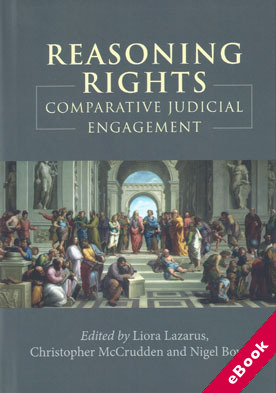
This book is about comparative reasoning in human rights cases. The aim is to explore the question: how is it that notionally universal norms are reasoned by courts in such dramatically different ways? What is the shape of this reasoning; what techniques are common across the transnational jurisprudence; and what are diverse?
The book, comprised of contributions by a team of world-leading human rights scholars, moves beyond simply addressing the institutional questions concerning courts and human rights, which too often dominate discussions of this kind, seeking instead a deeper examination of the similarities and divergence in the content of reasons being developed by different courts when addressing comparable human rights questions.
These differences, while partly influenced by institutional issues, cannot be attributable to them alone.This book explores the diverse and rich underlying spectrum of human rights reasoning, as a distinctive and particular form of legal reasoning, evident in the case studies across the selected jurisdictions.










