The eBooks we sell are sold as a single-user licence and are intended for the end user only.
The sale of some eBooks are restricted to certain countries. To alert you to such restrictions, please select the country of the billing address of your credit or debit card you wish to use for payment.
For further information see https://www.wildy.com/ebook-formats
Once the order is confirmed an e-mail will be sent to you to allow you to download the eBook. For UK purchases this will be automatic. For purchases outside the UK a member of staff will need to confirm the sale. (Staff are available to do this during normal business hours, Mon-Fri 8:30-17:00 UK time)
All eBooks are supplied firm sale and cannot be returned. If you believe there is a fault with your eBook then contact us on ebooks@wildy.com and we will help in resolving the issue. This does not affect your statutory rights.
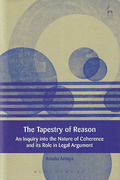
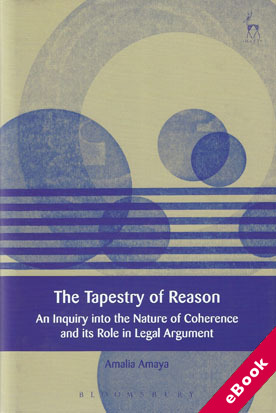
In recent years coherence theories of law and adjudication have been extremely influential in legal scholarship. These theories significantly advance the case for coherentism in law. Nonetheless, in the field of coherence theory in law a number of problems remain.
This ambitious new work makes the first concerted attempt to develop a coherence-based theory of legal reasoning, and in so doing addresses, or at least mitigates these problems.
The book is organized in three parts. The first part provides a critical analysis of the main coherentist approaches to both normative and factual reasoning in law. The second part investigates coherence theory in a number of fields that are relevant to law: coherence theories of epistemic justification, coherentist approaches to belief revision and theory-choice, coherence theories of practical and moral reasoning, and coherence-based approaches to discourse interpretation.
Taking this interdisciplinary analysis as a starting point, the third part develops a coherence-based model of legal reasoning. While this model builds upon the standard theory of legal reasoning, it also leads to rethinking some of the basic assumptions that characterize this theory, and suggests some lines along which it may be further developed.
Thus, ultimately, the book not only improves upon the current state of coherence theory in law, but also contributes to the larger debate about how to articulate a theory of legal reasoning that results in better decision-making.