
Our email services are slowly returning to normal and we will reply as and when they are received although some may still be delayed. If your enquiry is urgent you can still call the shop on (020) 7242 5778 (08.30-17:00).
Last updated 13/11/26 15:30 GMT
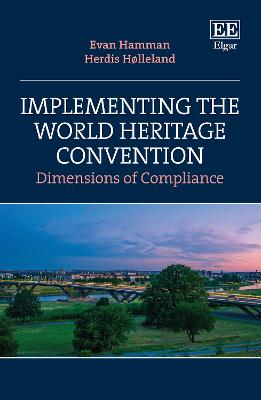
As the World Heritage Convention enters its 50th year, questions are being raised about its failures and successes. This topical book draws together perspectives across law and heritage research to examine the Convention and its implementation through the novel lens of compliance.
The book challenges the widely held view that managing the 'world’s heritage' is a non-regulatory, incentive-based task with limited sanctioning options. Combining theoretical perspectives with deep technical analysis and historical investigation, the book tackles the compliance question through an examination of twelve diverse cases.
Analysing past World Heritage sites like the Arabian Oryx Sanctuary (Oman) and Dresden Elbe Valley (Germany), as well as at-risk properties, like the Great Barrier Reef (Australia), Group of Monuments at Hampi (India) and Everglades National Park (United States), chapters trace the evolution and application of key non-compliance mechanisms like Reactive Monitoring, the In Danger List, and the Deletion procedure. In so doing, this book provides a comprehensive understanding of the Convention's compliance architecture and the tools available to respond to instances of non-compliance.
Illustrating how an improved compliance system is a critical component of a functioning and legitimate World Heritage regime, this book provides an invaluable resource to heritage and environmental policymakers and organisations looking to understand obligations under the Convention, as well as students and scholars coming to terms with the impact of the regime.










