
The eBooks we sell are sold as a single-user licence and are intended for the end user only.
The sale of some eBooks are restricted to certain countries. To alert you to such restrictions, please select the country of the billing address of your credit or debit card you wish to use for payment.
For further information see https://www.wildy.com/ebook-formats
Once the order is confirmed an e-mail will be sent to you to allow you to download the eBook. For UK purchases this will be automatic. For purchases outside the UK a member of staff will need to confirm the sale. (Staff are available to do this during normal business hours, Mon-Fri 8:30-17:00 UK time)
All eBooks are supplied firm sale and cannot be returned. If you believe there is a fault with your eBook then contact us on ebooks@wildy.com and we will help in resolving the issue. This does not affect your statutory rights.
The historic attempt to adopt a Constitution for Europe and its eventual rejection by the electorates of France and the Netherlands led to a renewed and impassioned debate about the future of the EU. Now, with the adoption of the Reform Treaty, the debate about the constitutional architecture of Europe is once again in the full public gaze. More than at any time in the past, Europe is engaged in a process of constitutionalisation which will shape its powers and activities for a generation
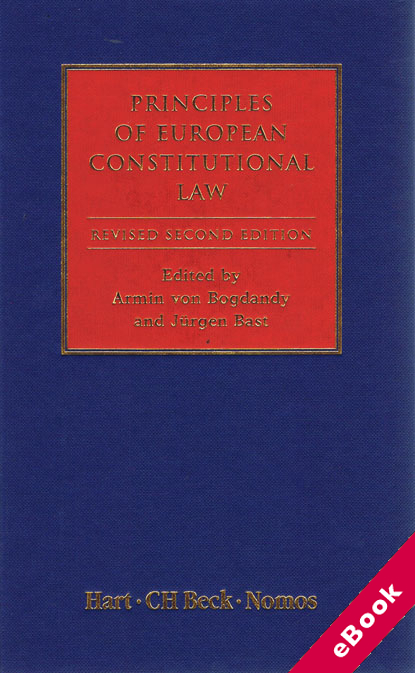
Following the warm critical reception given to the first edition of this work, the same editors and contributors have embarked on a second edition which once again presents European constitutional law not merely as a project but as binding law, law which establishes public power, legitimates legal acts, provides for citizenship, protects fundamental rights, and regulates the relationships among legal orders as well as between law and politics.
This, then, is European constitutional law both as it presently stands and as it will look following the Reform Treaty. The contributions present its theoretical and doctrinal fundamentals from the perspective of German-speaking scholarship, reflecting the state of modern research and methodology, illuminating legal doctrines and assumptions, and identifying the future research agenda.











