The eBooks we sell are sold as a single-user licence and are intended for the end user only.
The sale of some eBooks are restricted to certain countries. To alert you to such restrictions, please select the country of the billing address of your credit or debit card you wish to use for payment.
For further information see https://www.wildy.com/ebook-formats
Once the order is confirmed an e-mail will be sent to you to allow you to download the eBook. For UK purchases this will be automatic. For purchases outside the UK a member of staff will need to confirm the sale. (Staff are available to do this during normal business hours, Mon-Fri 8:30-17:00 UK time)
All eBooks are supplied firm sale and cannot be returned. If you believe there is a fault with your eBook then contact us on ebooks@wildy.com and we will help in resolving the issue. This does not affect your statutory rights.
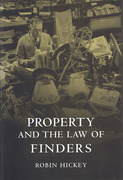
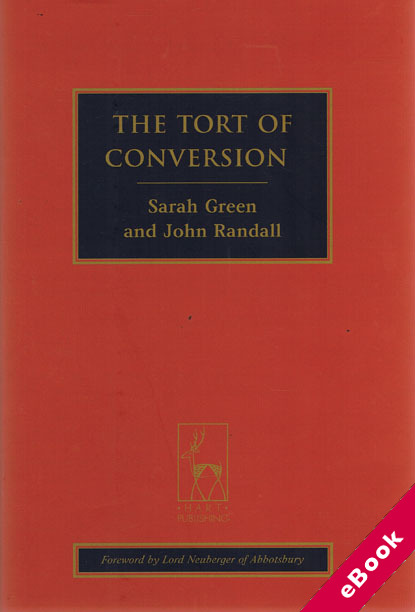
The legal and commercial importance of the tort of Conversion is difficult to overstate and yet there remains a sense that the principles of the tort are elusive. Most recently, this was illustrated by the difficulties posed for the House of Lords by the Conversion issue in OBG v Allan [2007] UKHL 21, on which it was closely divided.
Conversion, as we now recognise it, has a complex pedigree. Showing little regard for received taxonomies, it has elements which make lawyers think in terms of property, despite its eventful descent from actions in personam. Conversion is, therefore, something of a hybrid creature, which perhaps explains the paucity of scholarly analysis of the subject to date, property lawyers and tort lawyers each regarding it as the other's concern.
This book is the first comprehensive appraisal of the modern tort of Conversion. It offers a coherent and accessible rationalisation of the subject, supported by rigorous analysis of all aspects, from title to sue to the available remedies. The principal thesis of the work is that the development of Conversion has somewhat stagnated, and in consequence the tort has so far been unable to fulfil either its theoretical or its practical potential as a legal device.
Whilst this is partly a result of historical factors, it is also a consequence of the fact that no systematic examination of the tort in England appears ever to have been carried out. The primary objectives of the book, therefore, are to provide such an analysis, to present Conversion as a useful and important tort, well suited to the demands of contemporary law and commerce, and to offer a principled framework for its future development.