
The eBooks we sell are sold as a single-user licence and are intended for the end user only.
The sale of some eBooks are restricted to certain countries. To alert you to such restrictions, please select the country of the billing address of your credit or debit card you wish to use for payment.
For further information see https://www.wildy.com/ebook-formats
Once the order is confirmed an e-mail will be sent to you to allow you to download the eBook. For UK purchases this will be automatic. For purchases outside the UK a member of staff will need to confirm the sale. (Staff are available to do this during normal business hours, Mon-Fri 8:30-17:00 UK time)
All eBooks are supplied firm sale and cannot be returned. If you believe there is a fault with your eBook then contact us on ebooks@wildy.com and we will help in resolving the issue. This does not affect your statutory rights.
Wildy's Book of the Month: May 2011
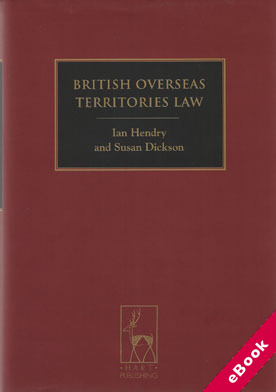
This is a manual of law and practice relating to the 14 British overseas territories, Anguilla; Bermuda; British Antarctic Territory; British Indian Ocean Territory; Cayman Islands; Falkland Islands; Gibraltar; Montserrat; Pitcairn Islands; St Helena, Ascension and Tristan da Cunha; South Georgia and South Sandwich Islands; Sovereign Base Areas in Cyprus; Turks and Caicos Islands; and Virgin Islands.Most if not all of these territories are likely to remain British outposts, and many have new constitutional arrangements. This book provides a comprehensive and up-to-date description of the constitutional and international status of the territories, and of the main elements of their modern governance in law and practice.
It describes their constitutional position and relationship with the United Kingdom, and goes on to deal with legislative, executive and judicial authority and controls, the sources of law, and human rights protection in the territories.
It analyses defence, security and emergency powers in the territories; the nationality and status of people 'belonging' to them; their public finance arrangements; their relationship with the European Union; and the conduct of their external relations. It examines the status of the territories in international law, their relationship with the United Kingdom in that context and the United Kingdom's international responsibility for them.
It concludes with a description of the means of terminating British sovereignty. An Annex sets out key features of each territory in turn, describing briefly its history, status, constitutional structure, courts, sources of law and economy.










