
The eBooks we sell are sold as a single-user licence and are intended for the end user only.
The sale of some eBooks are restricted to certain countries. To alert you to such restrictions, please select the country of the billing address of your credit or debit card you wish to use for payment.
For further information see https://www.wildy.com/ebook-formats
Once the order is confirmed an e-mail will be sent to you to allow you to download the eBook. For UK purchases this will be automatic. For purchases outside the UK a member of staff will need to confirm the sale. (Staff are available to do this during normal business hours, Mon-Fri 8:30-17:00 UK time)
All eBooks are supplied firm sale and cannot be returned. If you believe there is a fault with your eBook then contact us on ebooks@wildy.com and we will help in resolving the issue. This does not affect your statutory rights.
Due to a technical issue some ebooks are not available to order.
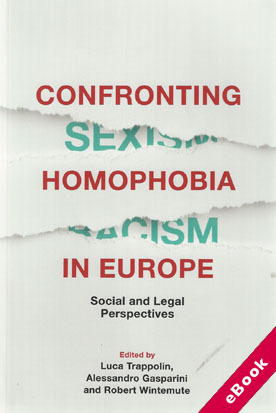
Homophobia has different qualitative and quantitative features in different European countries and within member States. On one hand, countries give uneven levels of legal protection to the rights of lesbian and gay people; on the other hand, the social meanings and practices related to homosexuality depend on the distinctive intersection of cultural systems such as gender, class and ethnicity within national contexts and communities.
The essays in this volume illustrate the findings of a European project on homophobia and fundamental rights in which sociologists and legal experts have analysed such elements in four member States: Italy, Slovenia, Hungary and UK.
The first part of the book is dedicated to the sociological investigation of the everyday life dimension of homophobia through qualitative methods which involved both heterosexual and self-defined lesbian and gay respondents, including those in ethnic and religious communities.
The second part is devoted to a juridical analysis of how homophobia is reproduced 'in law' and how it is contrasted 'with law'. The analysis follows a 'legal process' approach which examines statutory law and case law, so-called 'soft law', administrative practices, the discussion of bills within parliamentary committees, and decisions of public authorities.










