
The eBooks we sell are sold as a single-user licence and are intended for the end user only.
The sale of some eBooks are restricted to certain countries. To alert you to such restrictions, please select the country of the billing address of your credit or debit card you wish to use for payment.
For further information see https://www.wildy.com/ebook-formats
Once the order is confirmed an e-mail will be sent to you to allow you to download the eBook. For UK purchases this will be automatic. For purchases outside the UK a member of staff will need to confirm the sale. (Staff are available to do this during normal business hours, Mon-Fri 8:30-17:00 UK time)
All eBooks are supplied firm sale and cannot be returned. If you believe there is a fault with your eBook then contact us on ebooks@wildy.com and we will help in resolving the issue. This does not affect your statutory rights.
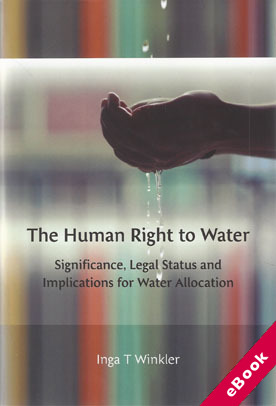
The United Nations General Assembly and the Human Rights Council recognised the human right to water in 2010. This formal recognition has put the issue high on the international agenda, but by itself leaves many questions unanswered.
This book addresses this gap and clarifies the legal status and meaning of the right to water through a detailed analysis of its legal foundations, legal nature, normative content and corresponding State obligations.
The human right to water has wide-ranging implications for the distribution of water. Examining these implications requires putting the right to water into the broader context of different water uses and analysing the linkages and competition with other human rights that depend on water for their realisation.
Water allocation is a highly political issue reflecting societal power relations, with current priorities often benefitting the well-off and powerful. Human rights, in contrast, require prioritising the most basic needs of all people.
The human right to water has the potential to address these underlying structural causes of the lack of access to water rooted in inequalities and poverty by empowering people to hold the State accountable to live up to its human rights obligations and to demand that their basic needs are met with priority.











