The eBooks we sell are sold as a single-user licence and are intended for the end user only.
The sale of some eBooks are restricted to certain countries. To alert you to such restrictions, please select the country of the billing address of your credit or debit card you wish to use for payment.
For further information see https://www.wildy.com/ebook-formats
Once the order is confirmed an e-mail will be sent to you to allow you to download the eBook. For UK purchases this will be automatic. For purchases outside the UK a member of staff will need to confirm the sale. (Staff are available to do this during normal business hours, Mon-Fri 8:30-17:00 UK time)
All eBooks are supplied firm sale and cannot be returned. If you believe there is a fault with your eBook then contact us on ebooks@wildy.com and we will help in resolving the issue. This does not affect your statutory rights.
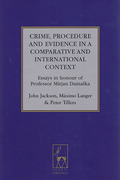
It is often said that criminal procedure should ensure that the defendant is a subject, not just an object, of proceedings. This book asks to what extent this can be said to be true of international criminal trials.
The first part of the book aims to find out to what extent defendants before international criminal courts are able to take an active part in their trials. It takes an in-depth look at the procedural regimes of international courts, viewed against a benchmark provided by national provisions representing the main traditions of criminal procedure and by international human rights law.
The results of this comparative endeavour are then used to shed light, from a practical point of view, on the oft-debated question whether (international) criminal trials should be used as a tool for writing history or whether, as claimed by Martti Koskenniemi, pursuing this goal leads to a danger of “show trials”.
Björn Elberling is an attorney in private practice in Kiel, specialising in criminal defence, media law and migration law. He is a former Research Fellow at the Walther Schücking Institute of International Law, University of Kiel.