
The eBooks we sell are sold as a single-user licence and are intended for the end user only.
The sale of some eBooks are restricted to certain countries. To alert you to such restrictions, please select the country of the billing address of your credit or debit card you wish to use for payment.
For further information see https://www.wildy.com/ebook-formats
Once the order is confirmed an e-mail will be sent to you to allow you to download the eBook. For UK purchases this will be automatic. For purchases outside the UK a member of staff will need to confirm the sale. (Staff are available to do this during normal business hours, Mon-Fri 8:30-17:00 UK time)
All eBooks are supplied firm sale and cannot be returned. If you believe there is a fault with your eBook then contact us on ebooks@wildy.com and we will help in resolving the issue. This does not affect your statutory rights.
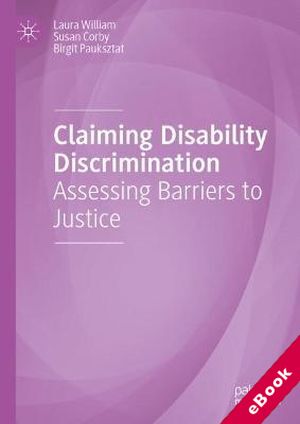
Research shows that when accessing and retaining work, and when seeking promotion, disabled people often face discrimination and disadvantage that can be unlawful. Obtaining a remedy is no easy matter as, although access to justice and a fair public hearing are key human rights, disabled claimants often face barriers in Employment Tribunals.
Using a unique and bespoke dataset, this book examines the factors that determine the outcome of these cases in British Employment Tribunals. These factors include the impact of case and claimant characteristics, the effect of public sector employment, what happens to disability discrimination claims when they contain claims for other types of discrimination such as race discrimination, and the distinctiveness of a claim for a failure to make a reasonable adjustment. The book concludes by proposing reforms to the legal system, government policy and wider social change, along with suggestions for future research. It will be of great interest to scholars and students of disability discrimination, as well as the broader fields of employment relations, EDI, HRM and labour studies.










