
The eBooks we sell are sold as a single-user licence and are intended for the end user only.
The sale of some eBooks are restricted to certain countries. To alert you to such restrictions, please select the country of the billing address of your credit or debit card you wish to use for payment.
For further information see https://www.wildy.com/ebook-formats
Once the order is confirmed an e-mail will be sent to you to allow you to download the eBook. For UK purchases this will be automatic. For purchases outside the UK a member of staff will need to confirm the sale. (Staff are available to do this during normal business hours, Mon-Fri 8:30-17:00 UK time)
All eBooks are supplied firm sale and cannot be returned. If you believe there is a fault with your eBook then contact us on ebooks@wildy.com and we will help in resolving the issue. This does not affect your statutory rights.
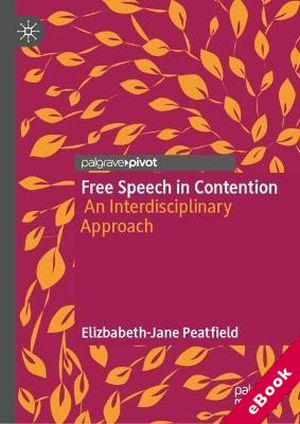
This short book examines the dynamic and complex nature of free speech, with reference to criminal law. It explores its historical roots, its role as a cornerstone of democracy, and its contemporary challenges. Free speech is not merely a legal right but a social and cultural tool that fosters democracy, innovation, and cultural progress. However, as society evolves, so too do the questions surrounding its boundaries and ethical implications.
This book combines scholarly rigor with accessible writing and a measured approach to engage readers and students across disciplines and ideologies. It seeks to understand what free speech means and where its limits lie. By incorporating real-world examples, such as the debates around J.K. Rowling's comments on gender or the misinformation campaigns during the Brexit referendum, the book delves into the tension between free expression and the challenges of misinformation, hate speech, and cultural censorship. It addresses free speech not as an abstract principle but as a living, breathing mechanism shaping democracy, innovation, and cultural understanding. Its scope encompasses legal, ethical, political, and cultural dimensions, offering a comprehensive yet nuanced exploration of free speech's evolving landscape. The chapters lend themselves well to classroom reading and include recommendations at the end of each chapter.











