
Due to the current Microsoft incident we are unable to access Email and also the supply of some eBooks may be delayed as well as our ability to process online payments - You can still call the shop on (020) 7242 5778 (08.30-17:00). Last updated 13/11/26 08:00 GMT
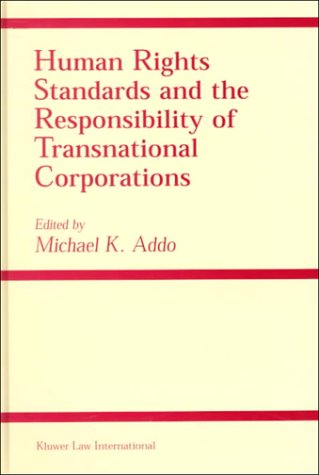
What does corporate responsibility mean and what are its foundations? Should companies themselves be responsible for human rights violations, or their subsidiaries? What principles should guide business in countries known to violate human rights? Is self-regulation sufficient, or are corporations best regulated by national or international codes, and on what should these codes be based?
These are some of the many questions which this collection of essays seeks to address as it assesses the value of applying human rights standards to transnational corporations. The increasing involvement of corporations in the public domain and the steady reduction of governmental involvement in commercial and social undertakings has created a desperate need to rethink the nature and role of the private corporation and its regulation.
The essays have been arranged under six broad themes: policy issues, regulation, issues of application, matters of doctrine, globalization and case studies. In addition, each section contains the opinion (not simply a summary of proceedings) of a nominated rapporteur who draws together the strands of each theme, and, where necessary, broadens the analysis to cover important issues which may not have been addressed.
At the heart of this volume is the attempt to define an effective framework for transnational corporate responsibility through international human rights standards. It should be of use to corporate legal advisers, human rights practitioners, NGOs, government law offices and academics, as well as to all those concerned with human rights and their place in the modern world.










