
The eBooks we sell are sold as a single-user licence and are intended for the end user only.
The sale of some eBooks are restricted to certain countries. To alert you to such restrictions, please select the country of the billing address of your credit or debit card you wish to use for payment.
For further information see https://www.wildy.com/ebook-formats
Once the order is confirmed an e-mail will be sent to you to allow you to download the eBook. For UK purchases this will be automatic. For purchases outside the UK a member of staff will need to confirm the sale. (Staff are available to do this during normal business hours, Mon-Fri 8:30-17:00 UK time)
All eBooks are supplied firm sale and cannot be returned. If you believe there is a fault with your eBook then contact us on ebooks@wildy.com and we will help in resolving the issue. This does not affect your statutory rights.
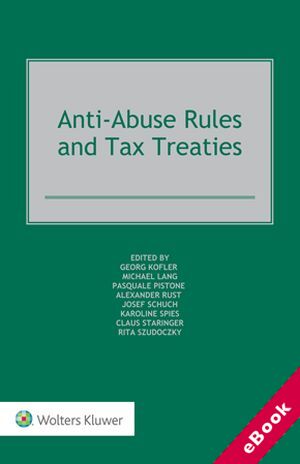
Anti-Abuse Rules and Tax Treaties is a book delving deep into current issues concerning the relations of various anti-abuse rules to each other and their impact on the application of tax treaties. As the struggle to combat tax abuse and tax avoidance gains momentum, ways of making a tax jurisdiction ‘manipulation-proof’ continue to proliferate, from new or revised provisions in model tax treaties to a dramatic increase in the number and variety of anti-abuse and anti-avoidance rules at all levels of government. These measures interact with national tax systems, general anti-abuse clauses and tax treaties, inevitably resulting in conflicts and other legal difficulties that deserve intensive scrutiny.
What’s in this book:
The following topics have been included:
The chapters are revised and expanded versions of papers presented at the 30th Viennese Symposium on International Tax Law held on 12 June 2023 at Vienna University of Economics and Business. Each author thoroughly analyses a specific topic, drawing on the most recent scientific research.
How this will help you:
This one-of-a-kind book offers a wide-ranging, detailed, and pragmatic analysis of how the full range of anti-abuse rules interacts with tax treaties. It will be highly appreciated by practitioners and law firms active in tax planning, tax consultants, academics and researchers in international tax law and counsel for companies involved in international business.










